Curtis Delaney, Buying-guide writer
I write the guides about where the water goes. That sounds like a small subject until you've read enough owner reviews to see how many dehumidifier problems start at the drain: a hose that climbs a few inches on its way to the sink, a pump outlet that takes different tubing from the gravity port, a floor drain that sits higher than it looks.
Most of my work happens in the dull pages of the paperwork. Parts diagrams, installation sections, the accessory listing that only fits one model suffix. I compare port sizes and thread types across models, check which units ship with a hose and which don't, and note how high each built-in pump is rated to lift water.
I also write about placement, because a unit pushed into a corner with its intake against the wall works harder than it needs to. Clearances are printed in nearly every manual and skipped by nearly every buyer.
I haven't hooked these units up in anyone's basement for this site, and I won't pretend I have. What I can do is read the documents carefully, line the models up, and tell you what to check before the box arrives.
Areas of expertise
- Gravity drains and condensate pumps
- Drain hoses, ports and fittings
- Placement and clearances
- Water routes to sinks, sump pits and floor drains
How I work
- I sketch the water route first: outlet height, hose run, and where it ends.
- I check port size and thread on the manual's parts diagram before any hose or pump goes on a list.
- In owner reviews I look for leaks, kinked hoses and pumps that quit.
- If a manual is vague about a fitting, I say it's vague instead of guessing.
Articles by Curtis Delaney
Written
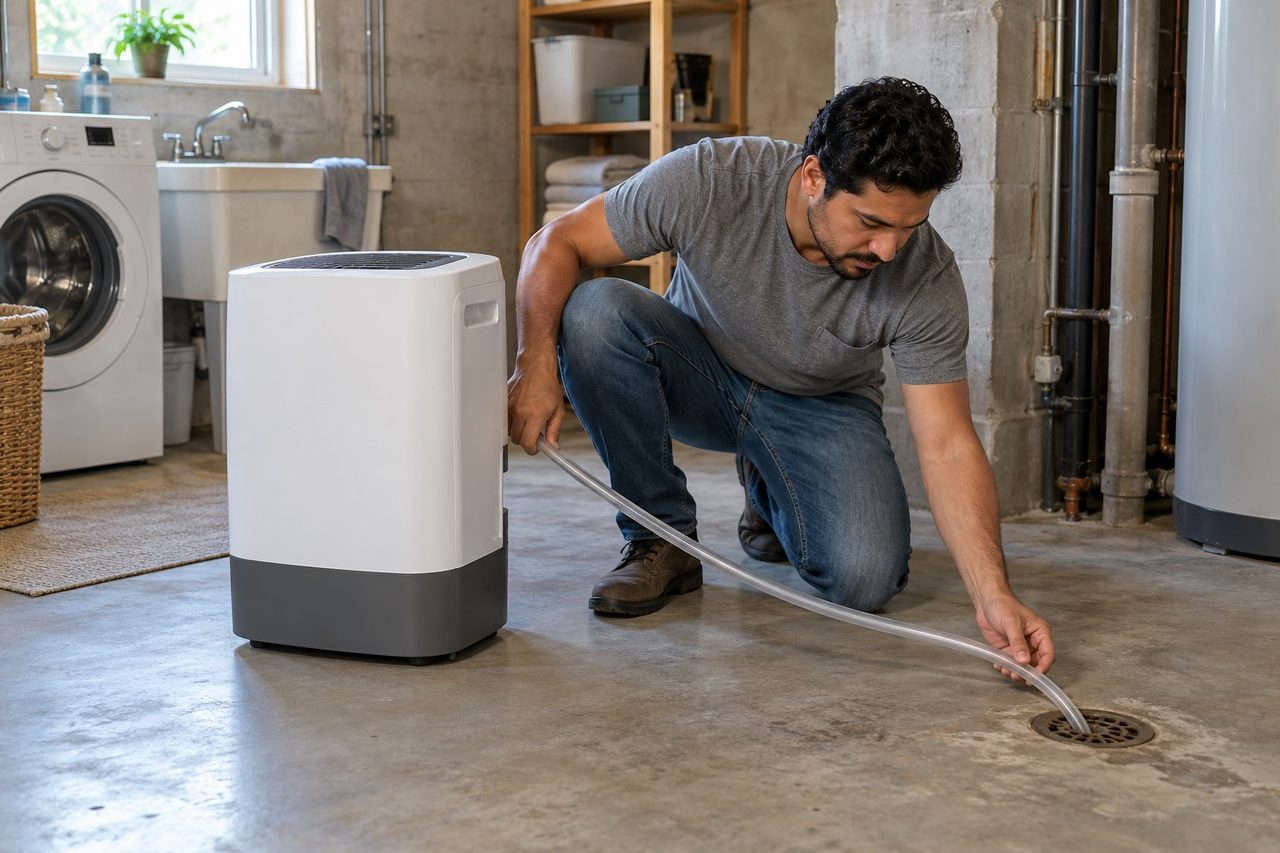 Basement humidity
Dehumidifier pump vs gravity drain: plan the water route
Choose between bucket emptying, continuous gravity drainage and a pump by mapping the actual discharge path.
Read the guide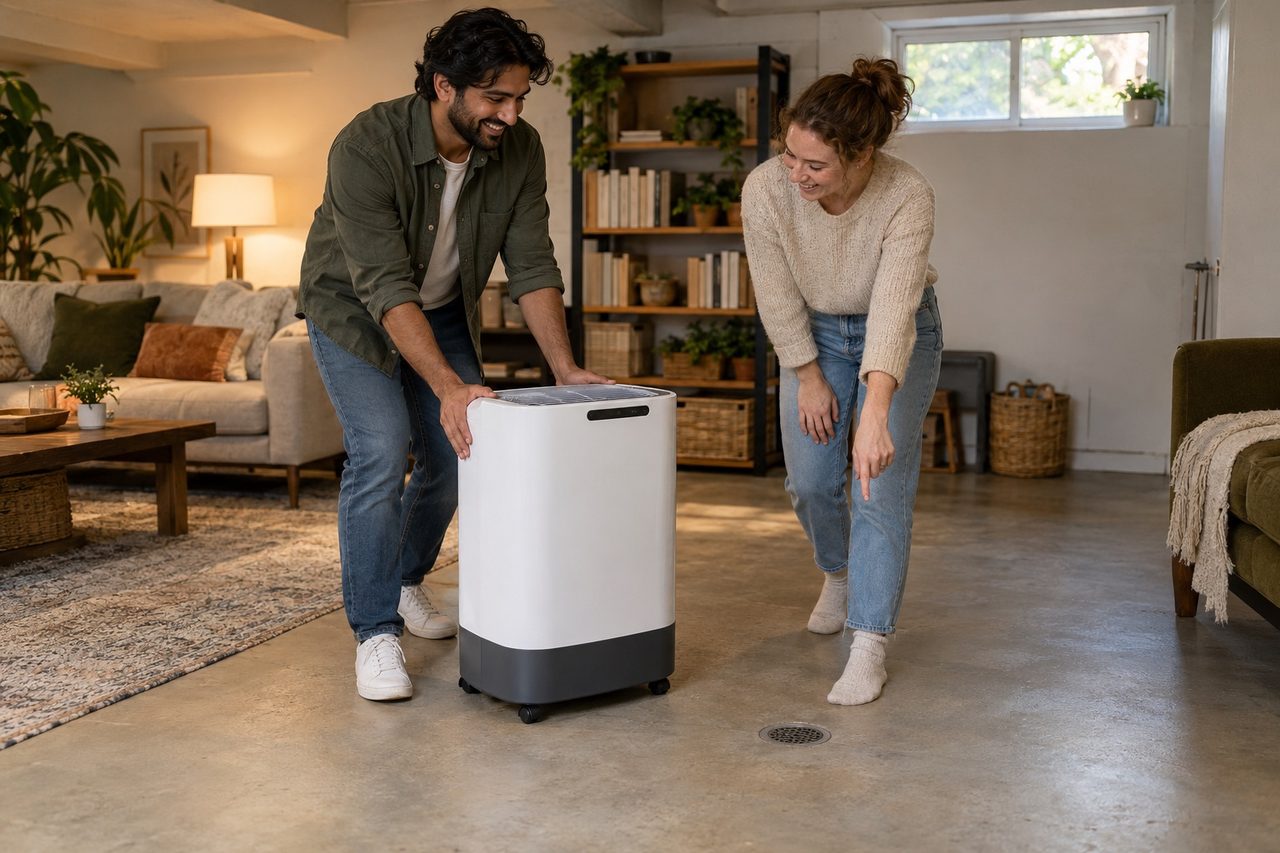 Basement humidity
Where to put a dehumidifier in a basement
Find a basement location that respects the exact manual while keeping water disposal and maintenance practical.
Read the guide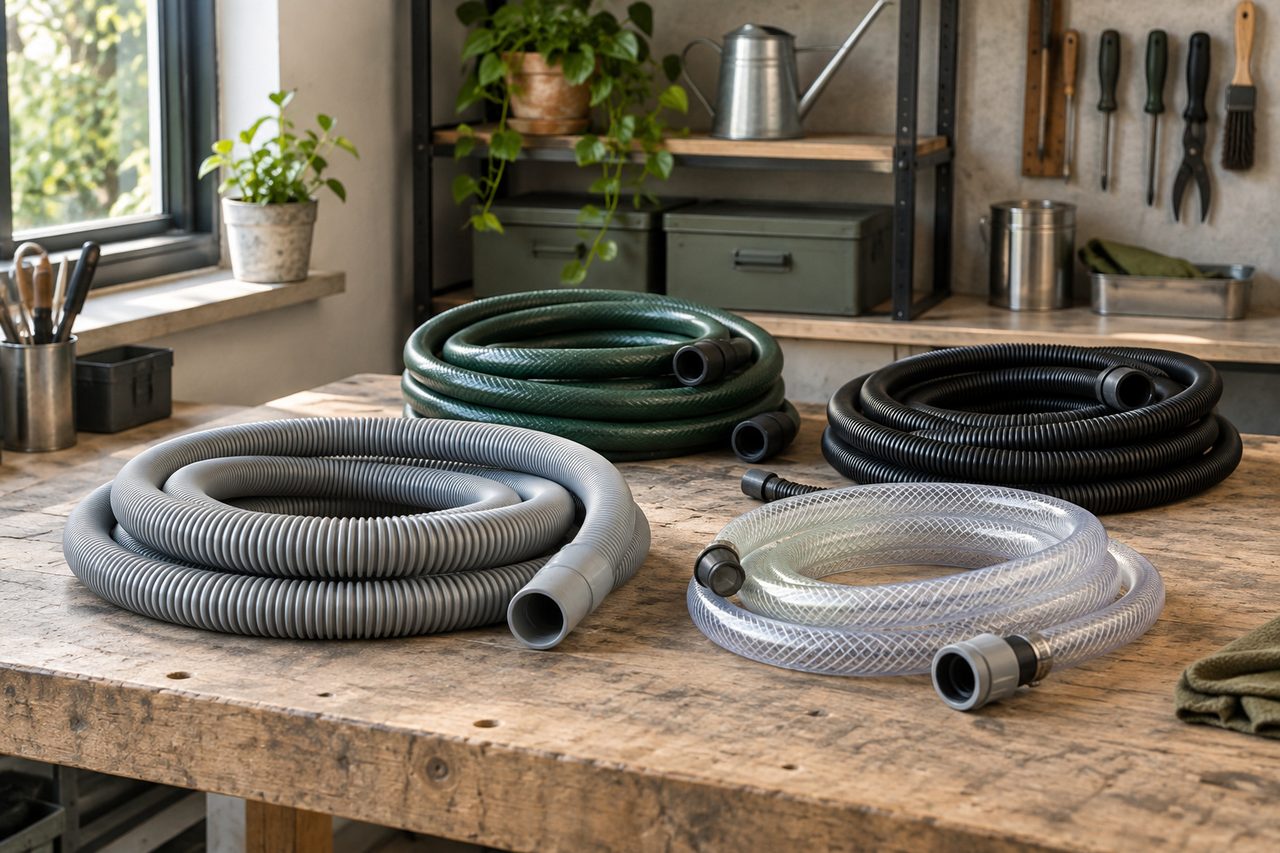 Basement humidity
Dehumidifier drain hose size and fit: check the port first
Check gravity outlets, pump tubing, fittings and model suffixes before ordering a drainage accessory.
Read the guideEdited
 Basement humidity
 level: what to aim for and how to measure
How to interpret basement relative humidity, choose a sensible target and investigate persistent dampness.
Read the guide Basement humidity
Damp basement still musty? A troubleshooting guide
A non-invasive sequence for separating water entry, moisture sources, airflow and dehumidifier operating problems.
Read the guideHow we compare and rate the units is explained on How we rate. The rest of the team: Our editors.