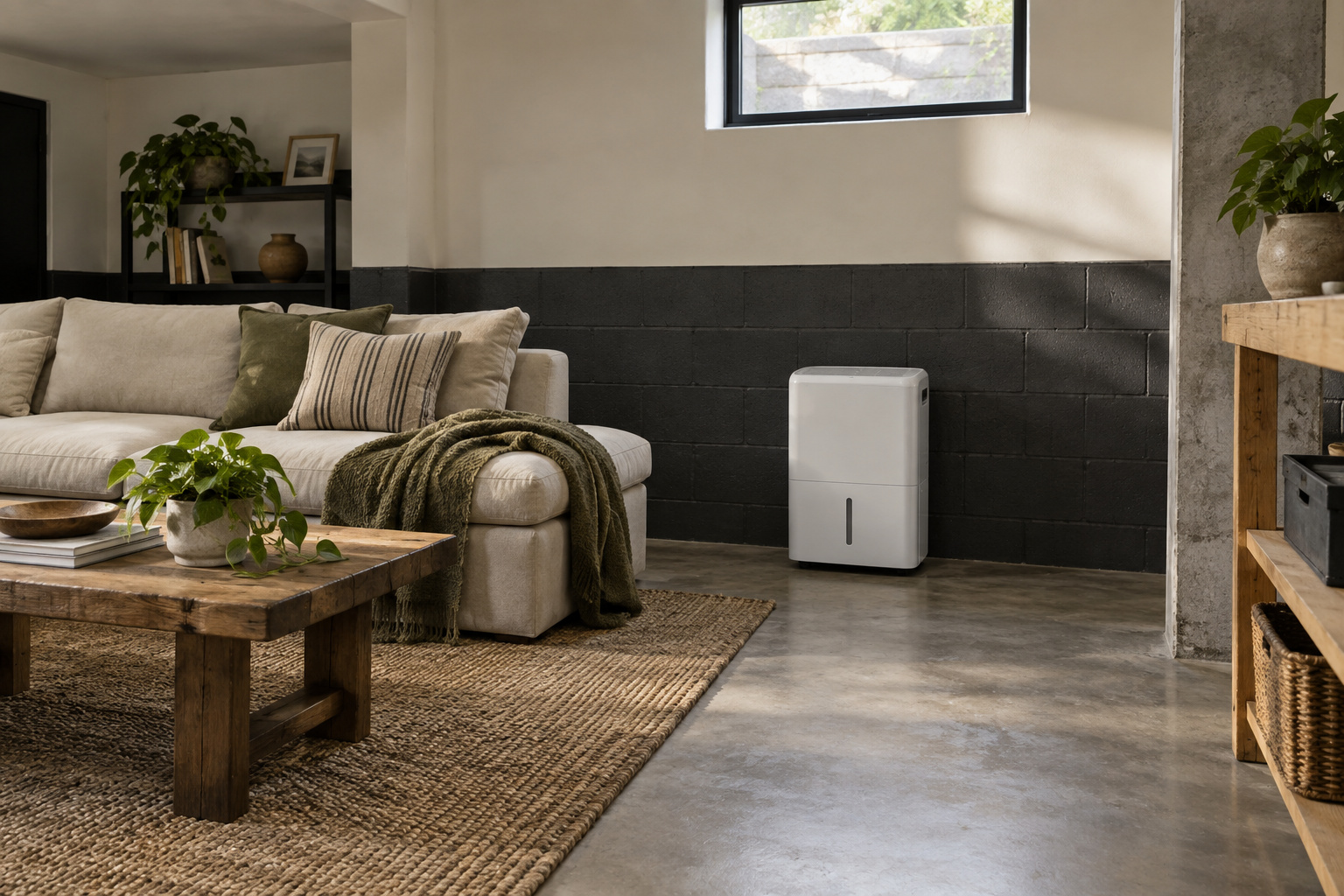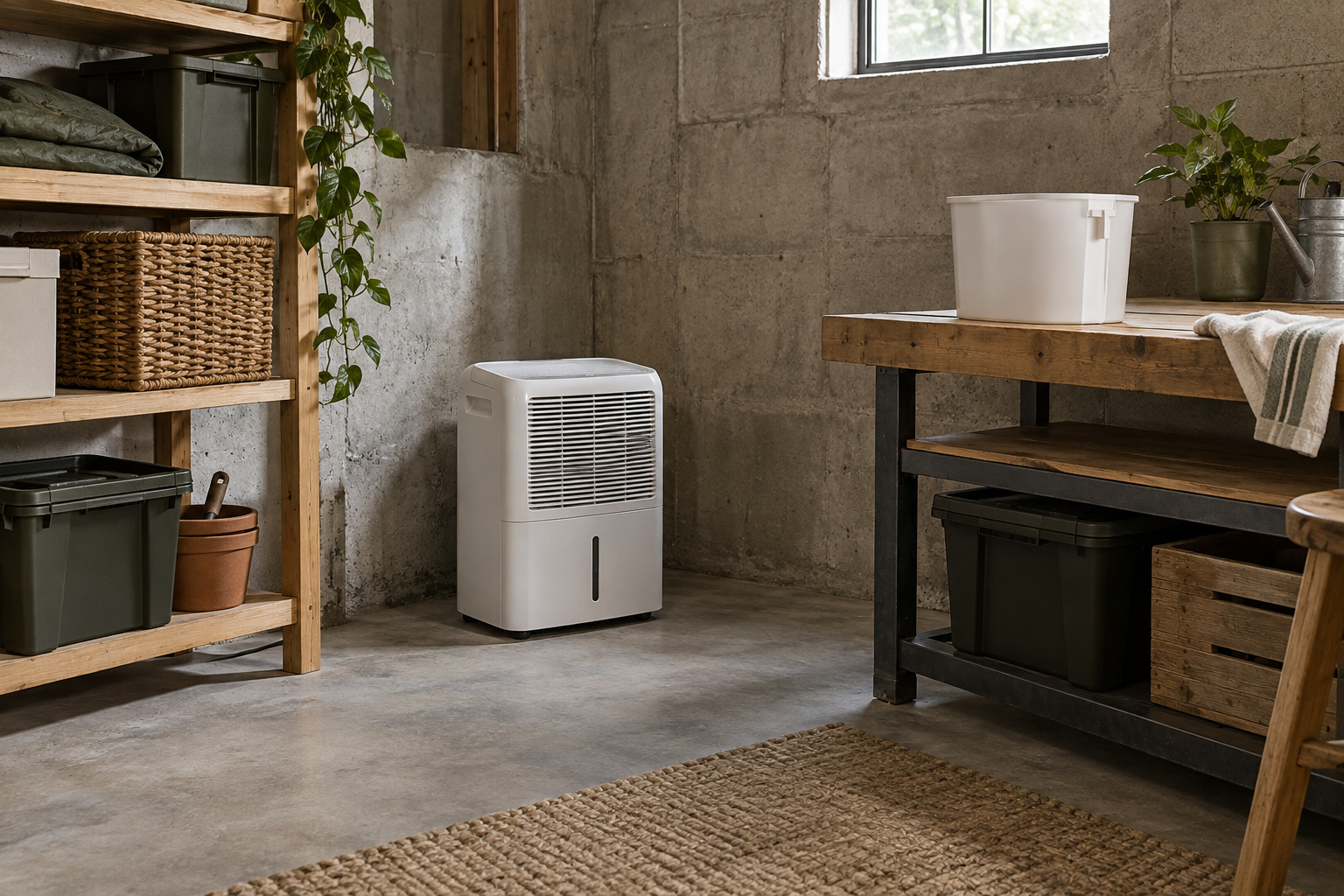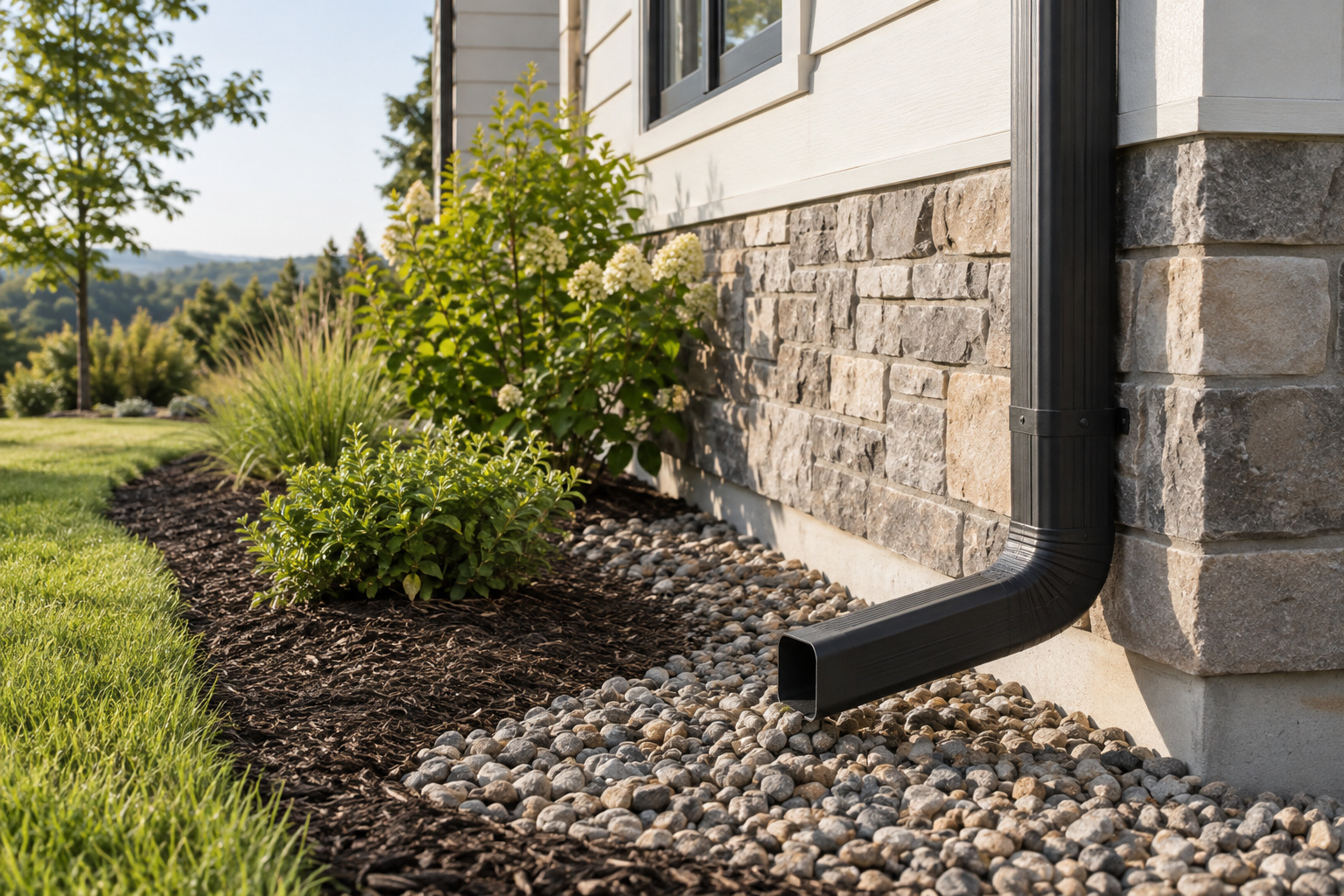
A persistent musty basement does not automatically mean the dehumidifier is too small. First identify what has changed, where the dampness appears and whether the appliance is operating as intended. Keep the investigation non-invasive and stop when conditions involve standing water, electrical hazards, extensive damage or work beyond ordinary user maintenance.
Start with water entry and visible damage
Walk the accessible, dry parts of the basement and record where moisture appears. Note recent rain, plumbing use and whether the same location is affected repeatedly. Look at accessible window wells, pipes and the relationship between damp spots and exterior walls. Do not open walls or disturb suspected contamination simply to complete a checklist.
The EPA guide emphasizes correcting the water problem as well as addressing mold. Contaminated water, significant damage and larger mold problems can require professional help. A portable dehumidifier is not a floodwater-removal appliance, and lower humidity does not remove existing mold. Keep people away from unsafe electrical conditions rather than trying to adjust controls through water.
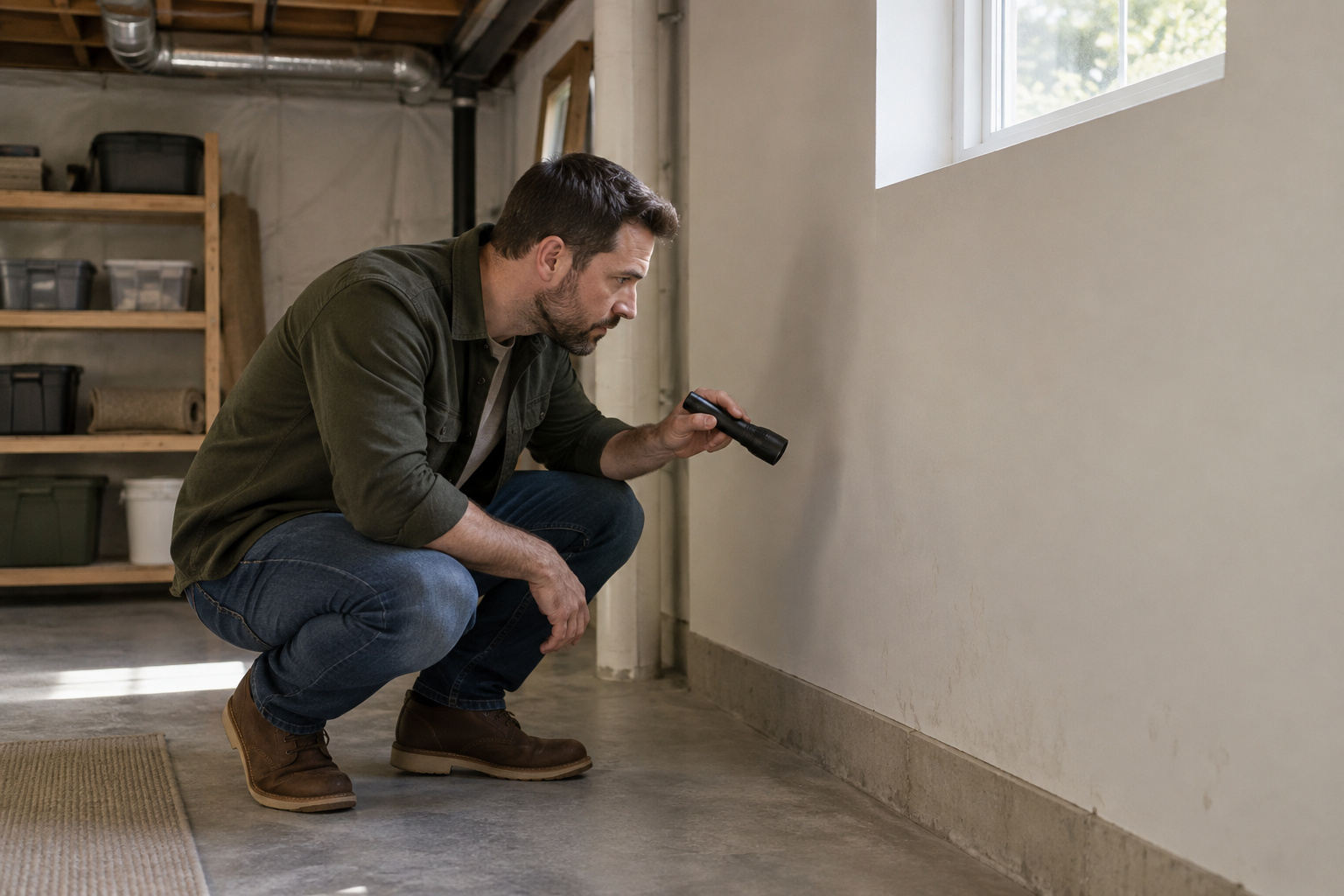
Create a short, useful observation log
Write down:
- Date and weather
- Room temperature and relative humidity
- Selected setting
- Water collection: whether water is collecting.
Include the bucket or drainage status and any displayed code. Use representative measurement locations so you can compare one observation with the next. The purpose is to identify a pattern, not to record every momentary fluctuation.
A problem only after storms suggests a different investigation from a spike during indoor laundry drying. A remote closet that stays damp while the main room improves suggests checking circulation and local sources. Read humidity measurements for a repeatable routine. Save photographs and exact error text for the manufacturer or building professional you may need to contact.
Check ordinary reasons for interrupted operation
Consult the manual for the controls, bucket-full behavior, required bucket seating and any restart delay. Confirm the operating mode rather than assuming a displayed setting means the compressor is currently removing moisture. Check whether a drain hose is connected to the intended port and whether a pump needs separate activation.
Do not bypass a float, switch or safety device to keep the machine running. If a breaker trips repeatedly or the cord is damaged, stop and seek appropriate help. The drainage guide explains why a machine can collect water but fail to dispose of it reliably. Record the symptom before resetting controls so useful evidence is not lost.
Review airflow, temperature and maintenance
Look for boxes against the grille, a blocked discharge, a dirty filter or doors that isolate the room you expected to dry. Verify clearances in the exact manual. Check that the room temperature falls within its supported range; a cold-room problem cannot be diagnosed from nominal pint capacity alone.
Use placement, cleaning and cold operation to review those constraints. Complete only the maintenance tasks the manufacturer assigns to users. Persistent frost, abnormal noises or repeated error codes deserve model-specific support rather than speculative instructions to open the cabinet or add refrigerant.
Decide what the next action should be
Separate your findings into building work, installation changes, ordinary maintenance and unresolved equipment symptoms. A leaking pipe belongs in the first group; an uphill gravity hose belongs in the second. This prevents an appliance replacement from becoming the answer to every kind of dampness. Give a professional your log and photos so the discussion begins with observable conditions.
If the appliance runs correctly but cannot control the connected space, revisit the sizing guide and the actual layout. Consider whether there is a continuing source of moisture or multiple isolated rooms. Our listings can support research into a replacement, but no product title can diagnose a foundation, determine mold-remediation scope or establish that a specific unit will solve your building problem.
| Group | Example from this guide | Next step |
|---|---|---|
| Building work | A leaking pipe | Professional, with your log and photos |
| Installation change | An uphill gravity hose | Reroute per the manual |
| Ordinary maintenance | Dirty filter or blocked grille | User tasks the manufacturer assigns |
| Equipment symptom | Persistent frost or repeated codes | Model-specific support |
Prepare a concise support request
Organize a support request around a specific symptom: the unit will not start, water reaches the bucket but not the drain, a code returns, or humidity remains high despite normal operation. Include the full model number, approximate installation date and manual section you followed. State observations separately from guesses about the cause. Attach the room log and photographs that clarify the setup, including the hose route or obstructed area when relevant. Describe what changed immediately before the problem, such as moving the appliance, cleaning the filter or a period of heavy rain. Do not include unnecessary personal information or attempt an internal repair simply to supply more detail. Ask what user-level checks are appropriate for the exact model and when operation should stop. If the problem concerns building water entry rather than the appliance, direct the same evidence to an appropriately qualified building professional. A focused request reduces the chance that advice for another product generation or a different moisture problem will be applied to your situation. Keep the response as part of the maintenance and installation record. Record any agreed next action, the responsible person and the observation that will show whether the issue has been resolved.