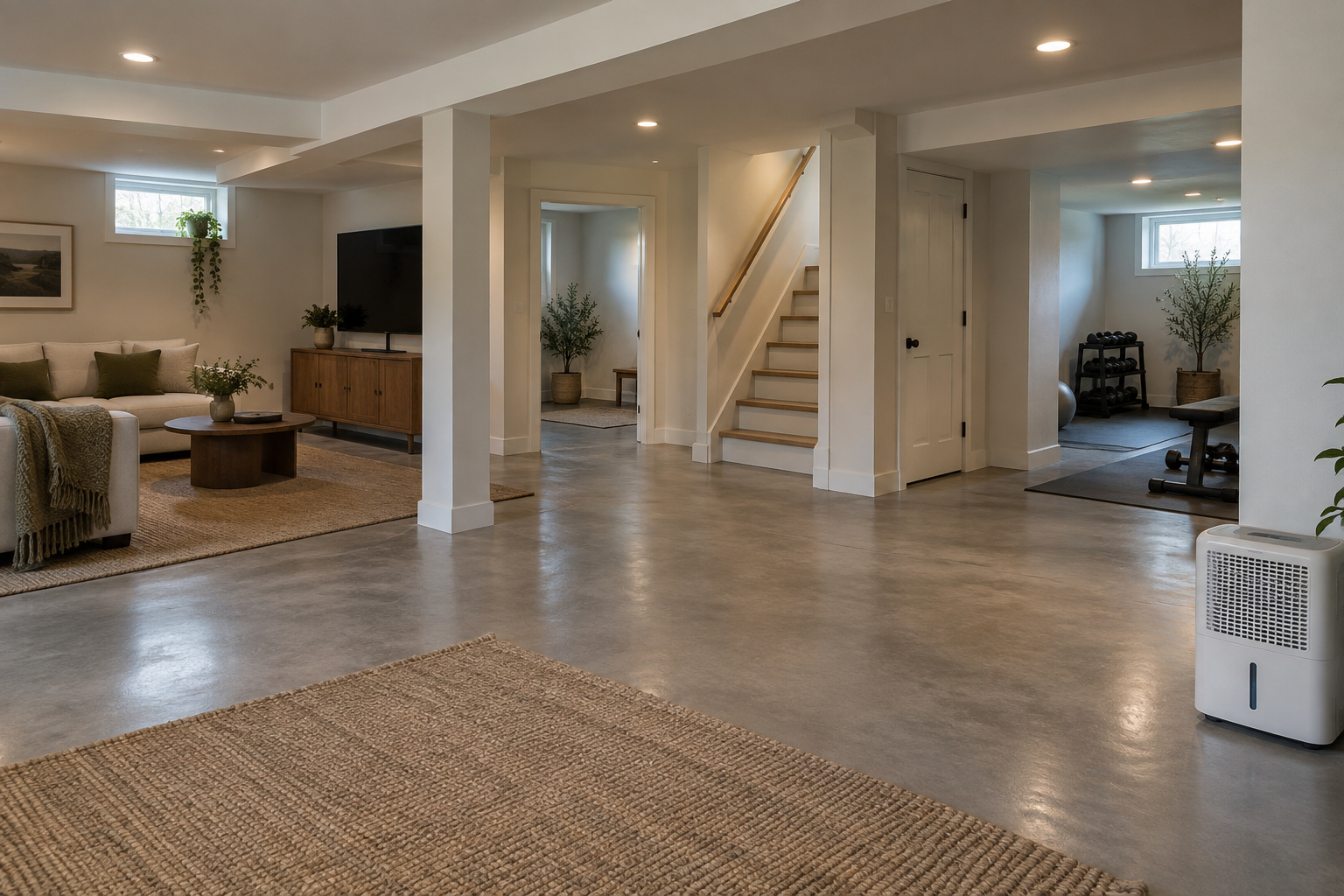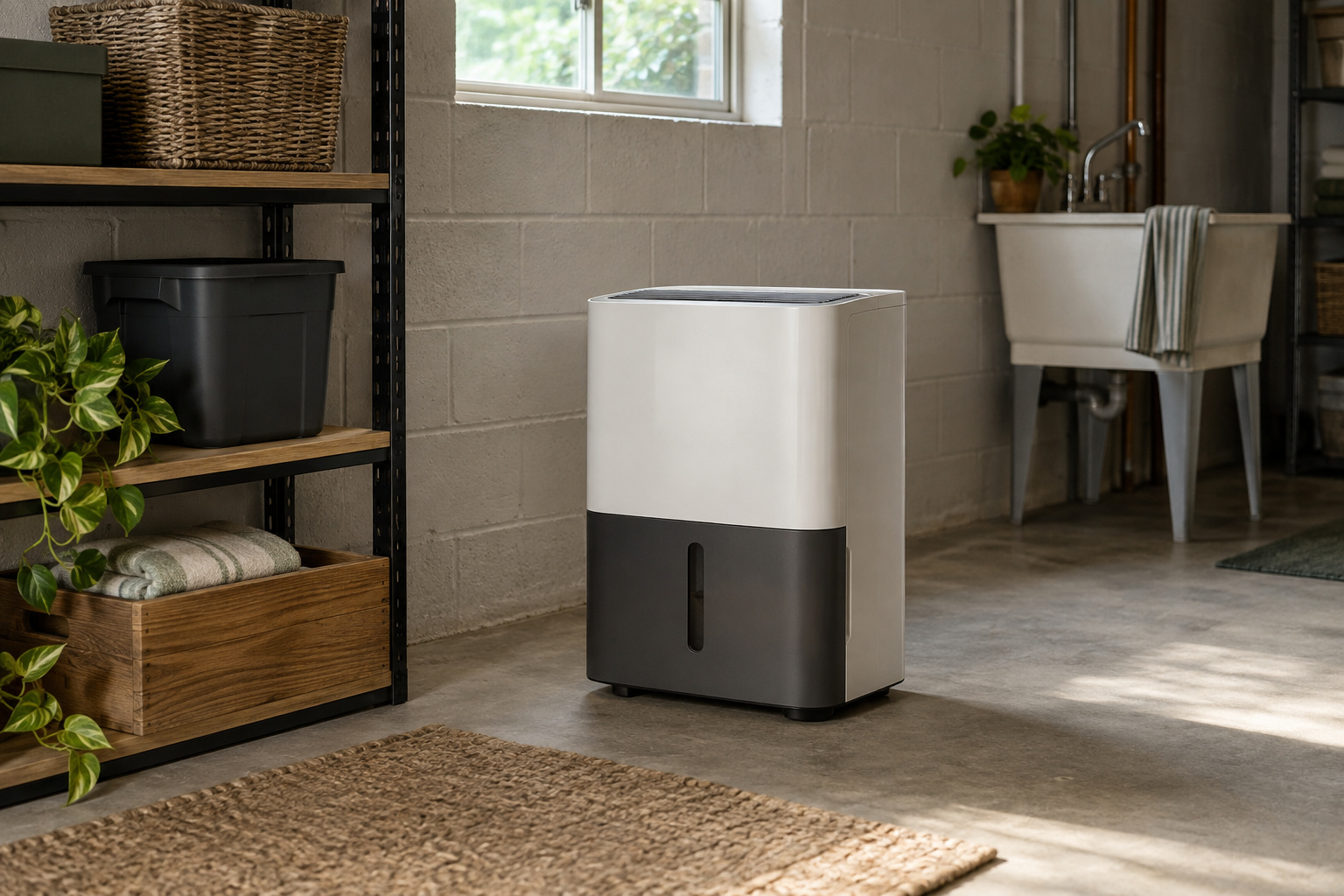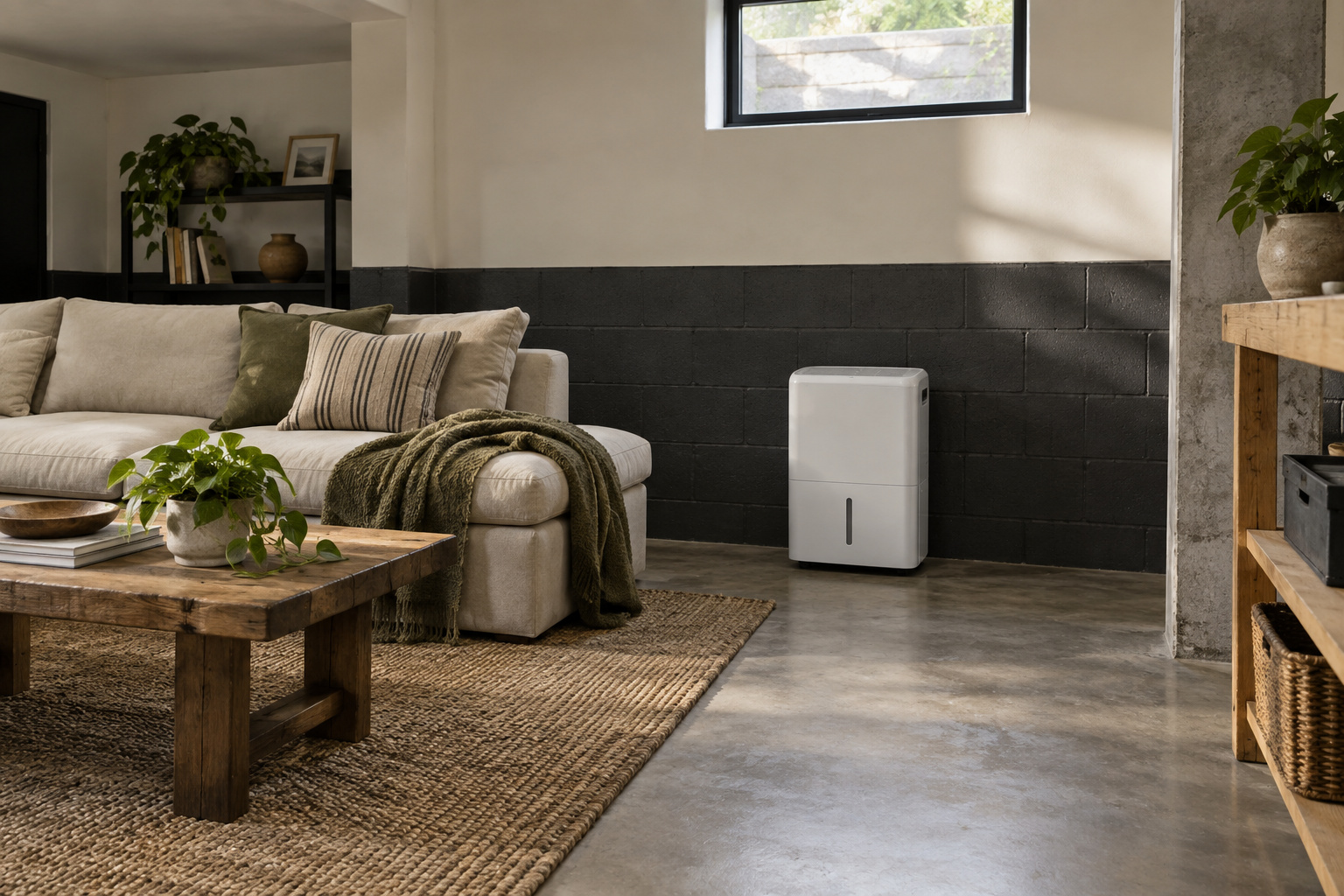
A basement can be damp and cold at the same time. That combination deserves more attention than simply choosing a higher daily pint rating. Record the temperature where the appliance will operate, especially during the coldest part of its planned season, and use the exact manufacturer manual to determine whether that environment is supported.
Measure the operating environment
Use a representative room measurement rather than a weather forecast or a thermostat upstairs. Note the location, time of day and whether the basement is heated. If conditions vary across rooms, record the colder intended installation area. The useful buying requirement is not an average annual temperature; it is the range the appliance may actually experience while running.
Keep temperature beside humidity in your log. Relative humidity can change as air temperature changes, so a high percentage alone is not a complete description of the moisture load. Our humidity-target guide explains why repeated, contextual observations are more useful than a single display reading taken next to the machine.

Understand the caution around cooler air
The ENERGY STAR buying guide recommends considering a product specified for lower temperatures when the space commonly falls below 65°F. It explains that frost on coils can interfere with moisture removal. That 65°F guidance is not a universal minimum operating temperature and should not be substituted for the manufacturer's stated limit.
The GE manual in our source list provides a different, exact operating range for the listed APEL50-family models. We do not transfer that range to every product sold under the GE name or to other appliances on this site. A listing that advertises a defrost feature still requires an exact model check before it belongs on a cold-basement shortlist.
| Source | Statement | Limit |
|---|---|---|
| ENERGY STAR | Consider a lower-temperature product if the space is commonly below 65°F | Not a universal minimum operating temperature |
| ENERGY STAR | Frost on coils can interfere with moisture removal | No capacity multiplier |
| GE APEL50-family manual | An exact operating range | Those listed models only |
| Listing defrost label | A feature to investigate | Needs an exact-model check |

Distinguish defrost from a performance promise
Automatic defrost manages a condition that can occur during operation; it does not prove that the appliance removes its nominal pints per day at every temperature. A manual may describe the compressor pausing while the fan continues. Read the documented sequence so that an expected pause is not mistaken for a failed machine.
Conversely, do not dismiss persistent frost or repeated errors merely because the product has a defrost label. Stop using it outside its supported conditions and follow manufacturer troubleshooting instructions. Do not chip ice from coils, modify sensors or use improvised heat to force operation. If the manual does not resolve the symptom, contact the manufacturer with the exact model, temperature and error display.
Look at the drainage route too
The appliance may be in a moderately cool room while the discharge hose runs through a much colder area. Include the complete water route in your plan. Check the instructions for temperature limits affecting pump operation, tubing and discharge. Do not assume a pump feature makes an exposed drain route suitable for freezing conditions.
Read gravity drain versus pump before selecting a discharge method, and keep the route visible enough to inspect. Avoid solving a temperature problem by moving equipment into a cramped cupboard with blocked airflow. The placement guide connects temperature, circulation, electrical access and drainage in one installation checklist.
Decide when a different approach is needed
If your intended environment falls outside a candidate's operating range, remove that candidate from consideration unless the manufacturer supplies applicable documentation. Do not invent a capacity multiplier or assume that buying a larger version cures the mismatch. Seek advice about equipment intended for the actual environment and about the moisture source itself.
For an existing appliance, write down the start time, room conditions, observed defrost behavior and whether water is collecting. This gives support staff a useful symptom history without requiring you to open the unit. Review the troubleshooting guide for leaks, restricted airflow and drainage interruptions that can coexist with cold operation. Correcting the building problem remains part of the plan even if suitable low-temperature equipment is selected.
Prepare questions for a cold-room equipment supplier
Give the supplier:
- Temperature: your measured temperature range.
- Humidity: your humidity observations.
- Season: the months you expect to operate the appliance.
Identify whether the space is normally heated and whether the drain route passes through a colder area. These details are more useful than saying only that the unit will be in a basement. Ask which exact model documentation supports the proposed environment. Request the operating limits and any published performance information relevant to those conditions. If the answer is only a nominal pint rating, ask how that rating relates to the stated test conditions rather than assuming a direct prediction for your room. Keep the response with the full model identifier so it cannot accidentally be applied to a different version later. For an existing appliance, include photographs of the display and a written description of when frost or pauses occur. Do not repeatedly cycle power just to obtain a different result. A clear record can help distinguish expected control behavior from a support issue while keeping the investigation within ordinary user observations. It also makes a replacement decision more grounded than shopping by a low-temperature phrase in a title.